Natural History
- “Natural History offers a luminous perspective on how we collect, classify, and make meaning of the natural world. These poems demonstrate the insights possible when scientific expertise meets poetic sensitivity, creating work that is both intellectually rigorous and deeply moving.”—Neil Shubin
Boreal vestige: atop its bluff, the lone
wolverine surveys the cratonic vista,
sparse trees and the grays of extinct
volcanoes splayed to the horizon—
The rose of twilight culminates
in the air, the haze as pristine
as one perfected only in frescoes.
They comfort the return visitor—
These habitats that never change:
idylls for the wrecked earth.
—from “Dioramic Idylls”
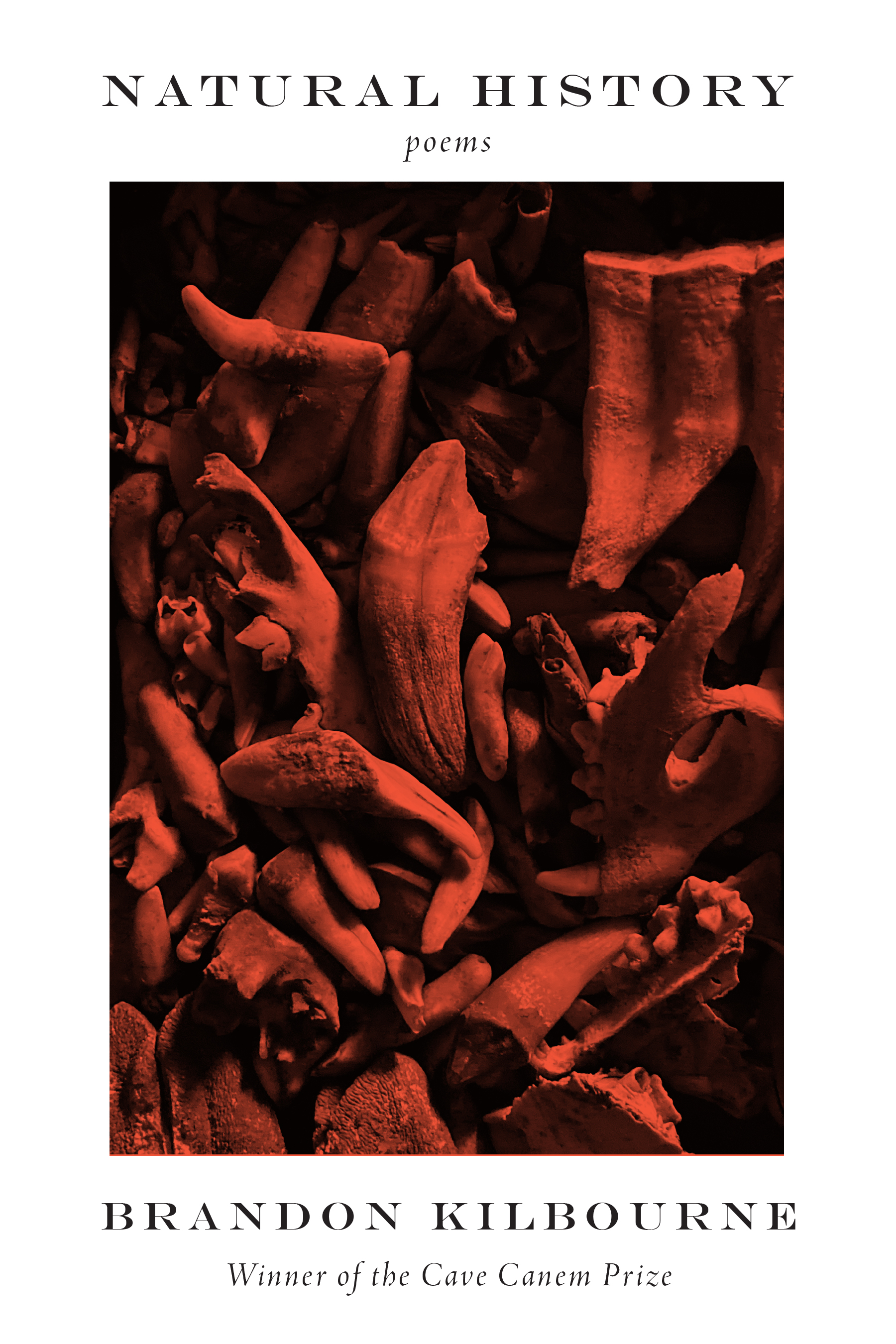
Natural History opens by confronting the hidden histories within the study of biology and its links to colonialism, including the revelation that European scientists used slave ships to transport specimens from Africa and the Americas back to Europe. Across the collection, Kilbourne describes how these histories of exploitation are still reflected in dioramas of elephants, rhinoceroses, and African people displayed in natural history museums. Other poems narrate the intricate work of studying fossils, and a longer sequence recounts an expedition above the Arctic Circle to recover evidence of how a fish’s fins gave rise to the diversity of limbs found among amphibians, reptiles, birds, and mammals.
Natural History is a rare and fascinating debut, and Kilbourne’s exquisite eye brings the role of the working biologist to life.
Praise
- “Kilbourne pushes back against . . . the carefully made museum with its curated forgetting, silences, and erasures, even the scientists (then and now) who could never have imagined someone like him turning his early calling not only into scientific study but also into poetry. Natural History is a marvel.”—Natasha Trethewey
“This is one scientist-poet who belongs.”—Rien Fertel, NOLA.com
“…it’s the biologist within Kilbourne that sees connections between human beings and plants, minerals, and animals, all as cargo on ships, and all ‘collected’ to be enslaved or studied and displayed, that imbues his poetry with such fierceness.”—Mikal Wix, West Trade Review

“He writes scientific detail from a foundation of knowledge, but just as much beauty, wonder and a sense of magic.”—Rob McLennan